

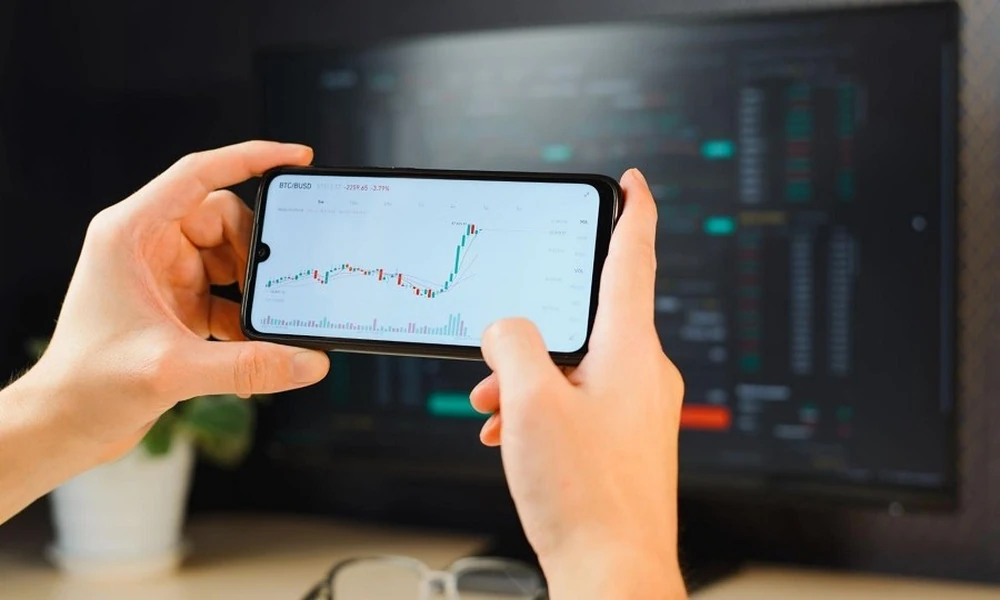
An Online Trading App gives investors and traders digital access to financial markets through a smartphone or other connected device. Instead of placing orders through traditional offline channels, users can monitor securities, review market information and submit transactions through a single interface.
For beginners, understanding how these applications work is more important than choosing one based only on popularity. Trading involves financial risk, and convenience does not remove the need to research securities, understand costs and make informed decisions.
This guide explains the main functions of an Online Trading App, the features worth examining and the practical factors users should consider before using one for market transactions.
How An Online Trading App Works
A trading application acts as the digital interface between an investor and the stock market through a registered intermediary. Once an eligible trading and demat setup is active, users can search for listed securities, view market prices and place permitted orders.
A typical transaction begins when the user selects a security, specifies the quantity and chooses an order type. The application sends the instruction through the trading infrastructure, where it is processed according to market conditions.
Executed securities are subsequently reflected in the user’s holdings or positions based on the nature of the transaction and applicable settlement rules.
Understanding The Trading And Demat Connection
A trading account and a demat account perform different functions.
The trading account facilitates market transactions, while the demat account electronically holds eligible securities. Applications often integrate both functions within the same interface, which can make the distinction less visible to beginners.
Investors should nevertheless understand what each account does, particularly when reviewing statements, settlement information and transaction history.
Features That Matter For Regular Market Users
The usefulness of an Online Trading App depends on more than its appearance. Market participants may need different tools depending on whether they primarily hold shares for longer periods, trade actively or follow multiple asset categories.
Useful features may include:
- Live or reasonably updated market information
- Search tools for securities and contracts
- Watchlists for tracking selected instruments
- Portfolio and holdings views
- Order status information
- Price alerts and notifications
- Charts and basic analytical tools
- Transaction reports
- Funds and margin information
- Security controls for account access
The presence of more features does not automatically make an application suitable for every user. Beginners may benefit more from a clear interface and understandable order flow than from a large number of advanced functions.
Evaluating The Order Placement Experience
Placing an order should involve more than pressing a buy or sell button. Users should understand the information displayed before confirming a transaction.
Common Order Types To Understand
A market order generally seeks execution at the available market price, while a limit order lets the user specify a preferred price subject to execution conditions.
Other order types may also be available depending on the platform, exchange rules and instrument being traded.
Before submitting an order, users should review details such as quantity, price, product type and estimated charges where available. An accidental selection can affect the resulting position.
Anyone comparing a broking app should therefore examine the complete order journey rather than judging the platform only by its home screen.
Research Tools And Market Information
Market information can support decision-making, but it should not replace independent evaluation.
An Online Trading App may provide company information, charts, corporate announcements, financial ratios or related market data. Some applications also offer screeners that allow users to filter securities using selected parameters.
Using Charts With Appropriate Context
Charts visually represent historical price and volume information. They may help users examine trends, trading ranges and previous market behaviour.
However, historical patterns do not guarantee future price movements. Technical indicators are interpretation tools rather than assurances of a particular outcome.
Longer-term investors may place greater emphasis on business fundamentals, financial statements, industry conditions and valuation, while short-term traders may focus more heavily on price, liquidity and risk controls.
Charges Can Affect Trading Decisions
Cost is an important consideration when selecting a trading platform.
Depending on the service and transaction, users may encounter brokerage fees, exchange-related charges, taxes, statutory levies and other applicable costs.
A low advertised brokerage rate should therefore not be viewed in isolation. Investors can review the full schedule of charges and understand which costs apply to the transactions they expect to make.
Frequent trading can make transaction costs particularly relevant because relatively small charges may accumulate across numerous trades.
Security Deserves Careful Attention
Financial applications contain sensitive personal and account information. Security should therefore be treated as a core selection factor rather than an optional feature.
Users should consider protections such as:
- Secure login procedures
- Two-factor authentication where supported
- Device verification
- Session controls
- Transaction alerts
- Account activity notifications
Basic Security Habits For Users
Platform security also depends partly on user behaviour.
Avoid sharing passwords, PINs, one-time passwords or other authentication information. Applications should be installed through official distribution channels, and unfamiliar links requesting financial credentials should be treated cautiously.
Keeping the operating system and application updated may also help address known security vulnerabilities.
Trading And Investing Require Different Approaches
Trading and investing both involve financial markets, but they commonly use different decision frameworks.
Trading generally focuses on shorter price movements and may involve more frequent transactions. Investing often involves holding assets for longer periods based on factors such as business quality, financial performance, diversification and personal financial objectives.
An Online Trading App may support both activities, but users should avoid treating every feature as relevant to their own strategy.
Someone building a long-term portfolio may need holdings information, research and reporting tools, while an active trader may place greater importance on execution controls, charts and real-time market monitoring.
What Beginners Should Check Before Getting Started
New users can reduce avoidable mistakes by learning the application before placing significant transactions.
Start by understanding where orders, holdings, positions, funds and reports are displayed. Review terminology used for different order types and check how completed, pending, cancelled and rejected orders appear.
It is also useful to understand the risk involved in each product category. Equity delivery, intraday trading and derivatives do not carry identical risk characteristics.
Avoiding Decisions Based Only On Price Movement
A rapidly rising share price can attract attention, but price movement alone does not explain the underlying reason.
Before acting, investors can examine business developments, financial results, exchange disclosures and broader market conditions. Traders should similarly define risk limits before entering positions instead of deciding only after prices move against them.
Looking Beyond Equity Trading
Some financial platforms provide access to more than listed shares. Depending on eligibility and the services offered, users may also encounter mutual funds, exchange-traded funds, initial public offerings and other market-related products.
Each product has a different structure, cost profile and level of risk. Users should understand those differences before allocating money.
For investors who need personalised assistance in evaluating fund choices, consulting an appropriately qualified mutual fund advisor may provide a different level of guidance from simply using the product-discovery tools available inside an application.
Conclusion
An Online Trading App can make market access more convenient by combining order placement, holdings, research tools and account information within a digital interface. However, convenience should not be confused with lower investment risk.
Before choosing or using an application, investors should examine account security, order functionality, costs, reporting features and the range of supported products. More importantly, they should understand the securities they trade and use the platform according to their financial objectives and risk tolerance.
A well-designed application can support the investment process, but informed decisions still depend on research, discipline and responsible risk management.
FAQs1. What Is An Online Trading App?
It is a digital application that allows eligible users to access market information, place permitted orders and monitor their investments through an integrated interface.
2. Do I Need A Demat Account To Trade Shares Online?
For eligible securities that are held electronically, a demat account is generally required alongside the appropriate trading setup.
3. What Features Should Beginners Check First?
Beginners should examine usability, order placement, holdings, charges, reports, security controls and access to understandable market information.
4. Are Mobile Trading Applications Risk-Free?
No. Market losses remain possible regardless of whether transactions are placed through a mobile application, website or another permitted channel.
5. Can Trading Applications Be Used For Long-Term Investing?
Yes. Many applications provide portfolio and holdings features that can also support investors who hold securities for longer periods.
6. Why Should Investors Review Trading Charges?
Transaction-related costs can affect the overall economics of market activity, particularly when a user trades frequently.
